
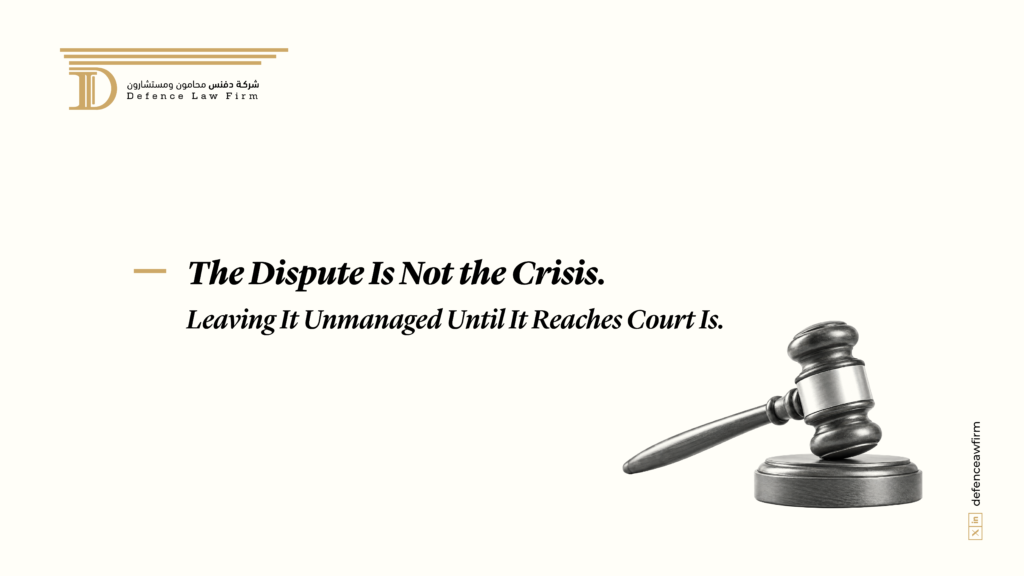
In a fast-growing business environment such as Saudi Arabia, where partnerships and contracts continue to expand under Vision 2030, commercial disputes can arise regardless of how well-intentioned the parties may be. The real difference lies not in whether a dispute occurs, but in how it is managed. A dispute addressed early may be resolved through an amicable agreement, while neglecting it can lead to lengthy litigation that drains time, money, and business relationships.
Executive management teams therefore need a practical dispute resolution framework that balances the protection of legal rights with the preservation of business interests.
Table of Contents
ToggleLegal Position vs. Business Objectives
Many parties make the mistake of confusing what they are legally entitled to claim with what they actually want to achieve. A company may have a strong claim against a supplier who has failed to deliver on time, yet its real objective may be to ensure the continued supply of goods at an acceptable quality rather than simply obtain compensation.
Before entering negotiations, companies are advised to ask two questions: What are we legally entitled to? And what do we actually need? The answer to the second question determines the most appropriate settlement approach and often differs from the answer to the first.
Preparing the Negotiation File and Choosing the Right Timing
Negotiating power is built on documentation, not impressions. A well-prepared negotiation file typically includes:
- The contract, its appendices, and correspondence relating to the dispute.
- A clear timeline of events.
- A substantiated estimate of losses and costs.
- An assessment of worst-case scenarios if the dispute proceeds to litigation or arbitration.
Timing is equally important. Early negotiations can preserve business relationships and reduce costs, but starting before the relevant documentation is complete may weaken a party’s position. The appropriate timing depends on the circumstances of each case. Mediation may be a suitable option when direct negotiations reach an impasse and both parties wish to preserve their business relationship.
Drafting a Robust Settlement and Release Agreement
Parties may successfully agree on the general terms of a settlement only to undermine its value through inadequate drafting. A well-drafted settlement agreement clearly identifies the claims covered by the settlement, the amounts payable, payment deadlines, and the consequences of delayed performance.
The release clause is particularly important and must have a clearly defined scope. Does it cover only existing claims, or does it also extend to potential future claims? An overly broad release may waive rights the company never intended to relinquish, while a narrowly drafted release may leave the door open to further disputes arising from the same circumstances.
Protecting Confidentiality and Preventing Future Disputes
Many companies seek to prevent disputes from becoming known to the market, customers, or competitors. It is therefore advisable to include a mutual confidentiality obligation that specifies what information may be disclosed and to whom, including regulatory authorities and professional advisers where appropriate.
To prevent recurring disputes, companies can also address the underlying causes by amending the original contract provisions, clarifying the mechanism for resolving future disagreements, and appointing a person responsible for monitoring implementation.
Dispute resolution is not a surrender of legal rights; it is a deliberate management approach that balances legal positions with commercial interests. The earlier a company acts with a well-documented case and a carefully drafted agreement, the lower the potential cost of the dispute and the greater its ability to protect business relationships and reputation. The next step is to assess the existing dispute with legal counsel before it moves beyond the stage of amicable resolution.
Is your company facing an existing or potential commercial dispute? Defence Lawyers & Consultants helps businesses manage settlements, negotiations, and mediation while protecting their legal rights and commercial interests. Contact us for specialized legal advice tailored to the nature of your dispute.